Teaching Literacy to Children with English as an Additional Language
10 essential considerations for teaching literacy to EAL pupils in Early Years and Key Stage One
Children with English as an Additional Language bring a wealth of knowledge, experience and language into the classroom. The challenge for teachers is not to simplify the curriculum, but to make language visible, meaningful and accessible so every child can take part, talk, understand and write with confidence.
Here are 10 essential considerations for supporting English as an Additional Language learners with literacy in EYFS and KS1...




1. Keep Expectations High
EAL learners are not less able because they are still developing English. Many children understand far more than they can say, especially in the early stages of language acquisition.
Give pupils access to rich stories, ambitious vocabulary, meaningful talk and exciting writing opportunities. The key is to provide the right scaffolds so they can participate successfully.
2. Use Visuals to Unlock Meaning
Images, symbols, objects, gestures, demonstrations and picture prompts help pupils understand new vocabulary and ideas without relying only on spoken English.
Visuals are especially powerful in early literacy because they give children something concrete to point to, move, describe, sequence and discuss before they write.
3. Make Talk Central to Every Lesson
EAL learners need regular opportunities to hear, rehearse and use English in meaningful contexts.
Plan talk before writing. Use partner talk, oral storytelling, sentence stems, repeated phrases and shared retelling so children can practise ideas aloud before recording them on paper.
4. Teach Vocabulary Explicitly
Vocabulary can be one of the biggest barriers for EAL learners, especially in story writing, phonics, comprehension and topic-based literacy.
Pre-teach important words, revisit them often, use pictures and actions, and show children how words work in sentences. Include everyday classroom language as well as story language, descriptive words and subject-specific vocabulary.
5. Value First Languages
A child’s home language is an asset, not a barrier. It supports identity, confidence, cognitive development and language learning.
Where possible, allow children to discuss ideas in their first language, use bilingual books, access dual-language resources, or share key words from home. This helps pupils make connections between what they already know and the English they are learning.
6. Scaffold Writing Without Removing Challenge
EAL learners should not be limited to low-level tasks. Instead, give them the support they need to access the same rich learning as their peers.
Use oral rehearsal, shared writing, modelled sentences, speaking frames, visual story maps, word banks and guided sentence construction. The goal is to reduce the language barrier, not the learning ambition.
7. Build Confidence Through Routine and Repetition
Clear routines help EAL learners feel safe and ready to participate. Repeated lesson structures, familiar story language, visual timetables and predictable classroom phrases all reduce cognitive load.
The more secure the routine, the more confident children become in experimenting with new words, phrases and sentence structures.
8. Use Peer Interaction Carefully
EAL learners benefit from hearing strong language models and working collaboratively with supportive peers.
Pair and group children thoughtfully. Collaborative storytelling, role play, sequencing activities and shared sentence building give pupils a reason to communicate and a safe space to practise.
9. Assess Progress Holistically
Early English proficiency does not always reflect a child’s true understanding, creativity or ability.
Use observation, talk, practical tasks, oral retelling, visual sequencing and supported writing to build a fuller picture. Look at how children understand, participate, rehearse language, use vocabulary and transfer ideas into writing over time.
10. Create a Classroom Where Every Language Belongs
Children learn best when they feel seen, included and valued.
Use multilingual displays, culturally diverse stories, labelled resources, visual prompts, dual-language books and family knowledge. A welcoming environment helps EAL learners feel that their language, background and ideas matter.





Find out how to transform your childrens' literacy results almost overnight.
Download Our Free Teachers' Guide
Common Questions About Teaching EAL Children in EYFS and KS1
What Does EAL Mean in Primary Schools?
EAL stands for Children with English as an Additional Language. It describes pupils who use or are exposed to a language other than English at home.
This includes a very wide range of learners. Some children may be new to English. Others may speak confidently in everyday situations but still need support with academic vocabulary, story structure, grammar, reading comprehension or written expression.
That is why EAL support should never be one-size-fits-all. A child who chats easily on the playground may still need help understanding the language of instructions, sequencing, inference, explanation, punctuation or written composition.
How Do EAL Learners Develop Literacy?
EAL learners are often doing more than one thing at once. They may be learning English, learning the curriculum through English, learning to read in English, and learning how written English works.
In Early Years and KS1, literacy development is strongest when children have:
- meaningful stories to talk about
- visual support to anchor understanding
- repeated exposure to useful vocabulary
- opportunities to rehearse language orally
- clear models of sentence structure
- practical experiences before writing
- time to build confidence
This is why "talk before writing" is so important. Before children can write a sentence, they need to understand the idea, hear the language, practise saying it and know how the sentence fits together.
How Long Does it take EAL Pupils to Learn English?
Every child is different. Some pupils develop everyday conversational English relatively quickly, especially when they are immersed in classroom routines and peer interaction.
However, academic English usually takes much longer. Pupils may need sustained support with subject vocabulary, sentence structure, comprehension, grammar and written expression long after they appear fluent in everyday speech.
For teachers, this means we should keep checking understanding, continue modelling language, and avoid assuming that confident speaking always means secure literacy.
Practical Techniques for Teaching Children with English as an Additional Language
1. Use Story Maps Before Writing
Story maps help children understand the beginning, middle and end of a story.
For EAL learners, they make structure visible. Pupils can see the characters, setting, problem and events before they are expected to write about them.
Try this:
- choose 3–5 key images
- place them in order
- model the story aloud
- repeat the story with actions
- invite pupils to retell with a partner
- add sentence openers when pupils are ready
- move from oral retelling to shared writing
2. Pre-Teach Story Vocabulary
Before introducing a new book or writing task, choose a small number of essential words.
For example, before a traditional tale, you might teach:
- forest
- cottage
- giant
- frightened
- climbed
- suddenly
Show each word with an image, action or object. Say it aloud. Use it in a sentence. Revisit it during the story and again during writing.
3. Model Sentences Out Loud
EAL learners need to hear how English sentences are built.
Instead of only asking children to write, model your thinking aloud:
“The dragon is the character. I want to describe the dragon. I could say: The fierce dragon flew over the castle. Now I need a capital letter, my adjective, my verb and my full stop.”
This makes the invisible thinking behind writing visible.
4. Use Sentence Stems
Sentence stems help pupils join in without having to generate the whole sentence alone.
Examples include:
- I can see…
- The character is…
- First, the…
- Suddenly, the…
- I think… because…
- The boy felt…
- The dragon went…
- At the end…
Over time, children can adapt and extend these structures independently.
5. Encourage Oral Rehearsal
Before pupils write, ask them to say their sentence.
Then ask them to say it again.
Then ask them to tell it to a partner.
This helps children hold the sentence in their memory, refine their grammar and build confidence before putting pencil to paper.
Find out how to transform your childrens' literacy results almost overnight.
Discover Mighty Writer
Book our amazing online presentation from Emma, our Literacy Expert and founder. It's free, with no obligation!
Useful Literacy Resources for EAL Children in EYFS and KS1
Here are 10 useful resources commonly used to support EAL learners:
1. Visual Timetables
Visual timetables help pupils understand the school day, routines, and transitions. They reduce anxiety and support independence.
2. Picture Word Banks
Picture word banks help pupils connect vocabulary with meaning. They are especially useful for story settings, characters, emotions, actions and topic words. Resources such as Widgit or the Widgit toolbar are very useful for this!
3. Dual-Language Books
Dual-language books help children and families access stories in English and a home language. They also show pupils that multilingualism is valued.
4. Bilingual Dictionaries and Translation Tools
Used carefully, bilingual dictionaries and translation tools can help pupils understand key words, check meaning and build independence.
5. Real Objects and Props
Objects make language concrete. Use puppets, story bags, artefacts, small-world play and classroom objects to introduce vocabulary and support retelling.
6. Sentence Stems and Speaking Frames
These give pupils a safe structure for speaking and writing. They are particularly helpful when children understand an idea but are not yet confident forming a full sentence in English.
7. Story Sequencing Cards
Sequencing cards help children retell events in order. They are excellent for oral rehearsal, comprehension and early writing.
8. Multilingual Classroom Displays
Displays that include different languages, scripts, and cultural references help pupils feel represented and included.
9. Collaborative Talk Activities
Partner talk, barrier games, role play and group storytelling give EAL learners a real reason to listen, speak and negotiate meaning.
10. Visual Writing Resources
Visual writing tools help children move from ideas to oral language to written sentences. They are especially valuable for pupils who have lots to say but struggle to get started on paper.





How Can Mighty Writer Support Children with English as an Additional Language?
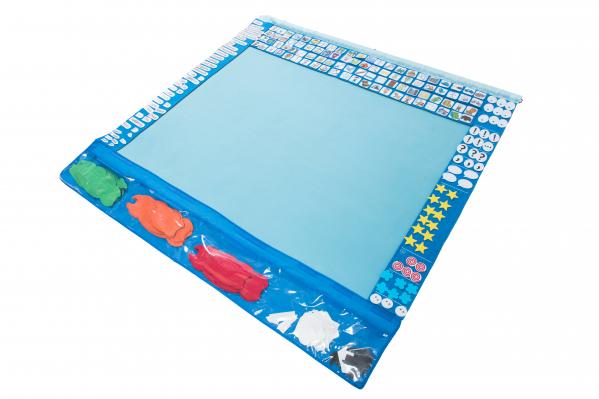
Mighty Writer is particularly well suited to EAL learners because it makes language visible, physical and easier to rehearse.
Writing can be challenging for EAL pupils because it requires many skills at once: vocabulary, grammar, sentence structure, sequencing, punctuation, handwriting, spelling and confidence.
Mighty Writer breaks that process down.
A visual gateway to language
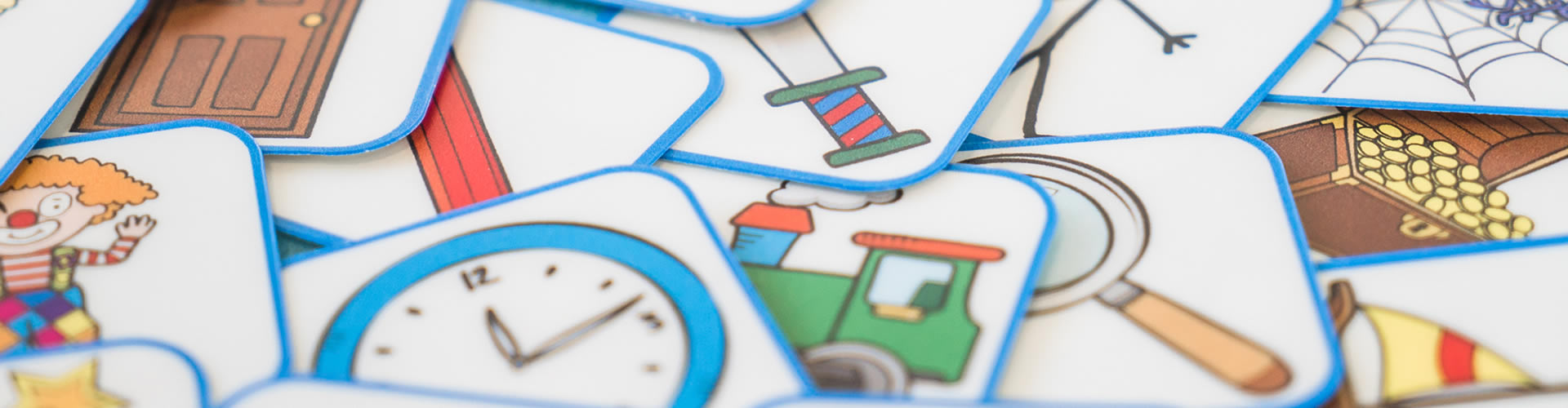
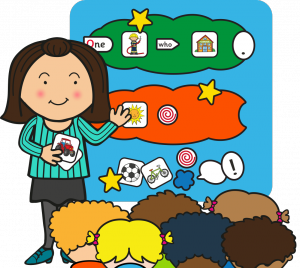
Mighty Writer uses images and symbols to represent characters, settings, objects, actions, emotions and sentence features.
This means EAL learners can access meaning immediately. They can point, choose, move, match, sequence and build ideas before they have all the English vocabulary to explain them.
For pupils who are new to English, this is powerful. They are not left out of the lesson because they cannot yet produce full sentences. They can still participate, show understanding and begin to connect images with words.
From talk to writing
Mighty Writer naturally supports the journey from oral language to written language.
Children can:
- see the idea
- say the word or sentence
- build the story physically
- rehearse it aloud
- write it with support
This mirrors the way many EAL learners need to develop literacy: through meaningful context, repeated language, oral rehearsal and structured writing support.
Vocabulary in context
Instead of learning words in isolation, pupils meet vocabulary inside a story.
They can see the dragon, move the dragon, describe the dragon, choose an action for the dragon and then write about the dragon.
This repeated, meaningful use helps vocabulary stick.
Sentence structure made visible
Mighty Writer helps pupils understand how sentences are built.
Children can physically arrange images, sentence mats, punctuation and symbols. This supports understanding of word order, sentence openers, conjunctions, adjectives, verbs, emotions and punctuation.
For EAL learners, this makes English grammar less abstract and more accessible.
A safe way to participate
There is no immediate pressure to write perfectly.
Children can experiment with ideas, move tiles, change the order, rehearse orally, listen to peers and build confidence before recording. This is particularly helpful for pupils who are hesitant to speak or write in English.
Support for new arrivals
For international new arrival pupils, Mighty Writer can provide an immediate way into literacy lessons.
Even when children are at the very early stages of English acquisition, they can use images and symbols to:
- choose characters
- show understanding
- sequence a story
- copy or repeat key words
- practise simple phrases
- join group storytelling
- build confidence with writing routines
Whole-class inclusion
Mighty Writer does not need to be used only as an intervention. It can be used with the whole class, groups or individuals.
This matters because EAL learners benefit from rich mainstream teaching, strong peer models and shared experiences. Mighty Writer gives the whole class a common visual language for storytelling, sentence building and writing.
Learn More About Mighty Writer

Help EAL Learners See it, Say it, Build it, and Write it
Mighty Writer helps children turn ideas into language, and language into writing. It gives Early Years and KS1 pupils a practical, visual, and confidence-building route into storytelling, sentence construction and independent writing.
Discover Mighty Writer
Book a free online presentation with Emma, our literacy expert and founder, and see how Mighty Writer can support EAL learners in your classroom.