Supporting Children with English as an Additional Language
Helping Children See it, Say it, Build it, and Write it
Teaching Writing
For children with English as an Additional Language, writing can feel like a very big leap.
They have wonderful ideas. They may understand the story. They may know exactly what they want to say.
But getting those ideas onto paper in English can be much harder.
That is because writing asks children to do many things at once. They need vocabulary, sentence structure, grammar, punctuation, spelling, handwriting, confidence and a clear idea of what comes next.
For EAL learners, the key is not to make the task smaller. It is to make the language more visible, more meaningful and easier to rehearse.
That is where Mighty Writer can make such a difference.
Mighty Writer helps children move from ideas to spoken language, and from spoken language to written sentences. Through images, symbols, sentence mats and tactile storytelling, pupils can build their ideas before they are expected to write them down.
Why Writing Can Be Challenging for EAL Learners
EAL pupils are often learning English while learning the curriculum through English.
In literacy lessons, this can mean they are trying to understand the story, learn new vocabulary, follow instructions, form sentences and write accurately — all at the same time.
Some children may be confident speakers in everyday classroom situations but still need support with story language, academic vocabulary, sentence openers, conjunctions and written grammar.
Others may understand far more than they can say. They may be following the lesson, recognising characters, sequencing events and making connections, but not yet have the English needed to explain their thinking in full sentences.
This is why writing support for EAL learners should begin before the pencil touches the page.
Children need to see the idea, hear the language, rehearse the sentence and build confidence before they are asked to record independently.
Talk Comes Before Writing
Oral language is the foundation of writing.
Before children can write a sentence, they need to be able to say it, hear it, play with it and remember it.
For EAL learners, this stage is essential.
Talk gives children the chance to:
- try out new vocabulary
- hear correct sentence models
- practise pronunciation and word order
- build confidence before writing
- learn from adults and peers
- rehearse ideas in a safe way
A simple but powerful classroom routine is:
Say it. Repeat it. Improve it. Write it.
For example:
“The bear ran.”
Then:
“The huge bear ran.”
Then:
“Suddenly, the huge bear ran into the forest.”
Each step helps children hear how a sentence grows.
Mighty Writer supports this beautifully because the sentence can be built visually as it is spoken. Children can choose the bear, add the adjective symbol, select an action, place the sentence opener and see the sentence come together before writing it.
Why Visuals Help EAL Pupils Write
Visuals give children access to meaning before they have all the English words.
A picture of a castle, a dragon, a forest or a frightened child immediately gives pupils something to talk about. They can point, choose, move, match, sequence and describe.
This is especially helpful for pupils who are new to English. They may not yet be ready to explain a full story aloud, but they can show understanding by selecting an image, placing it in order, adding a character or choosing what happens next.
Mighty Writer makes this process practical and engaging.
The image tiles help children create stories. The sentence mats help them understand structure. The punctuation and grammar symbols help them see how writing works. The arrows help them follow the story sequence.
Instead of writing being hidden inside a child’s head, Mighty Writer brings it out into the open.
Children can see what they are building.
Scaffolding Writing Without Lowering Expectations
Supporting EAL learners does not mean giving them easier, less exciting work.
It means giving them the right scaffolds so they can access rich learning alongside their peers.
Good scaffolding might include:
- images and symbols
- oral rehearsal
- sentence stems
- modelled writing
- partner talk
- word banks
- repeated story language
- shared writing
- first-language discussion where appropriate
- practical storytelling before recording
With Mighty Writer, teachers can scaffold at exactly the right level.
A child at the early stages of English acquisition might begin by choosing images and retelling a story through movement and pointing.
A more confident child might use sentence mats to build a simple sentence.
Another child might add adjectives, verbs, adverbs, conjunctions and punctuation to create a more complex sentence.
The whole class can work from the same story, while each child receives the level of support or challenge they need.
How to Use Mighty Writer with EAL Learners
Mighty Writer works particularly well for EAL pupils because it follows a natural journey from understanding to speaking to writing.
1. Start With the Images
Begin by choosing a small number of image tiles. 
For example:
- a girl
- a forest
- a wolf
- a basket
- a cottage
Ask the children to look, point and name what they can see.
Some pupils may use full sentences. Others may use single words. Others may show understanding by pointing or matching.
All of these are valuable starting points.
You might model:
"I can see a girl"
"The girl is in the forest"
"The wolf is hiding."
At this stage, the aim is not perfect writing. The aim is shared meaning.
2. Build the Story Together
Place the images onto the Mighty Writer Mat in order.
Use arrows to show what happens first, next and finally.
For example:
First, the girl walked through the forest.
Next, the wolf hid behind a tree.
Finally, the girl ran to the cottage.
Children can physically see the sequence of events. This supports comprehension, oral retelling, and later writing.
For EAL learners, this removes a huge barrier. They do not have to hold the whole story in their head while also searching for English words.
The story is right there infront of them.
3. Rehearse the sentences aloud
Before writing, practise saying the sentences.
Use repetition, actions and partner talk.
For example:
"The girl walked through the forest."
Say it together.
Say it to a partner.
Say it with an action.
Say it again, adding an adjective:
"The little girl walked through the dark forest."
Now the child has heard the sentence, spoken the sentence and connected it to images.
Writing becomes far less daunting.
4. Add Vocabulary in Context
Vocabulary is easiest to learn when it has meaning.
Rather than teaching a list of isolated words, use the story to introduce and revisit vocabulary.
For example:
- dark forest
- little girl
- hungry wolf
- quickly ran
- suddenly
- frightened
With Mighty Writer, children can add adjective, verb and adverb symbols to the sentence as they build it.
This helps them understand not only what the word means, but what the word does.
They begin to see that adjectives describe, verbs show action and adverbs tell us more about the action.
5. Move from Oral Sentence to Written Sentence
Once the sentence has been built and rehearsed, children can write it.
They can use the Mighty Writer mat as a visual reminder.
For example, if the mat shows:
Suddenly + girl + ran + forest + full stop
The child has a clear pathway to follow.
They are not starting with a blank page. They are transcribing a sentence they have already seen, said, built and understood.
This is especially helpful for EAL learners who may have strong ideas but need support holding the sentence in English.
A Simple Mighty Writer EAL Lesson Example
Here is a simple classroom activity for supporting EAL learners with story writing.
Learning Focus
To orally rehearse and write a simple story sentence.
Step 1: Choose the Story Images
Select three image tiles: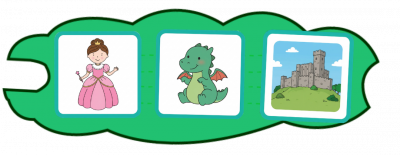
- a child
- a dragon
- a castle
Ask:
Who is in our story?
Where are they?
What might happen?
Accept pointing, single words, home-language discussion, short phrases or full sentences.
Step 2: Model the Sentence
Build a simple sentence on the mat:
"The dragon flew over the castle."
Say it aloud.
Ask the children to repeat it.
Add an action for "flew".
Step 3: Improve the Sentence
Add an adjective:
"The huge dragon flew over the castle."
Then add a sentence opener:
"Suddenly, the huge dragon flew over the castle."
Talk about how the sentence has changed.
Why Mighty Writer Works So Well for EAL Writing
Mighty Writer supports EAL learners because it brings together the things that make language learning effective:
- Visual support
- meaningful context
- oral rehearsal
- structured talk
- vocabulary repetition
- sentence modelling
- practical storytelling
- peer learning
- gradual independence
It helps children understand the story before writing it, and helps them to say the sentence before recording it. It helps them see how language works.
Most importantly, though, it helps them believe they can write.
Help EAL Learners Become Confident Writers
EAL learners have ideas worth sharing.
With the right support, they can take part fully in literacy lessons, build strong sentences and grow into confident, capable writers.
Mighty Writer gives teachers a simple, visual and practical way to support that journey.
It helps children see it, say it, build it, and write it.
See Mighty Writer in Action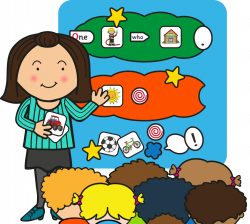
Book a free online presentation with Emma, our literacy expert and founder, and discover how Mighty Writer can support EAL learners in your classroom.